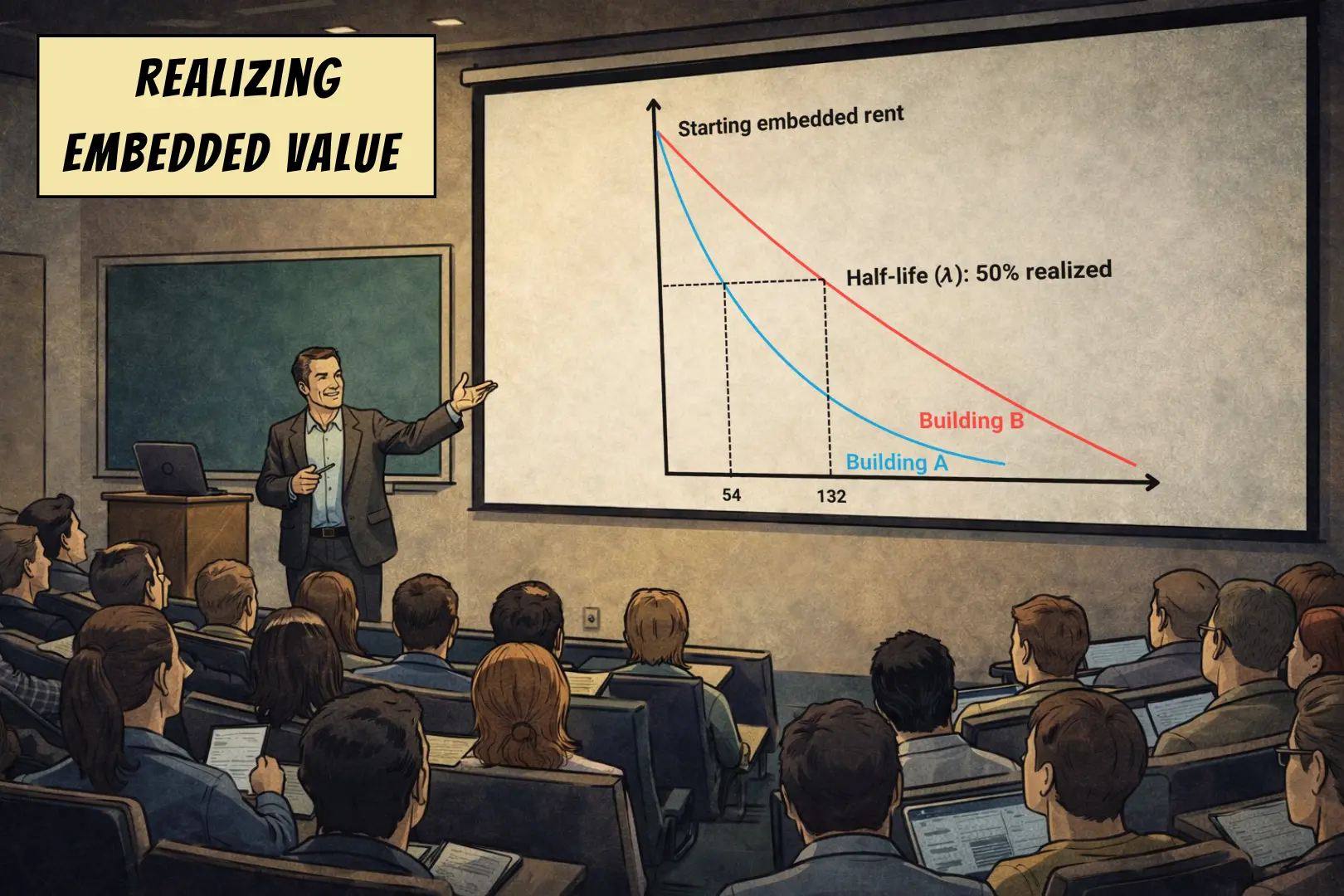
1. Two buildings each have 10% embedded rent. Your model shows the upside unlocking over your 5-year hold. IRR clears your hurdle.

    But here's what traditional models can't answer: Will that embedded rent actually materialize within your hold period—or does it belong to the next buyer?

    One building will take only 54 months to unlock half the value, while another will take 132 months. Does your model treat them identically?

    Different properties will take different amounts of time to realize the embedded rent
  2. Tortoise or hare? In rent-controlled markets, lease incentives can be framed as a race: discount to market (the tortoise) vs. free rent (the hare).

    The math seems straightforward—when will the hare catch up to the tortoise? But tenants who pay market rent behave much differently than tenants with discounts.

    Given that this decision repeats hundreds or even thousands of times across large portfolios, wrong assumptions about tenant behaviour can quietly erode returns.

    Free rent or discounted rent—a tortoise vs. hare race
  3. Tired of seeing your premium flex income ignored? The Top Slice method offers a simple, defensible way to reflect your property's full performance–without stepping outside accepted valuation practices.

    Learn how splitting your NOI into “stable” and “premium” slices can give lenders, investors, and auditors a clear picture of your property's true worth.

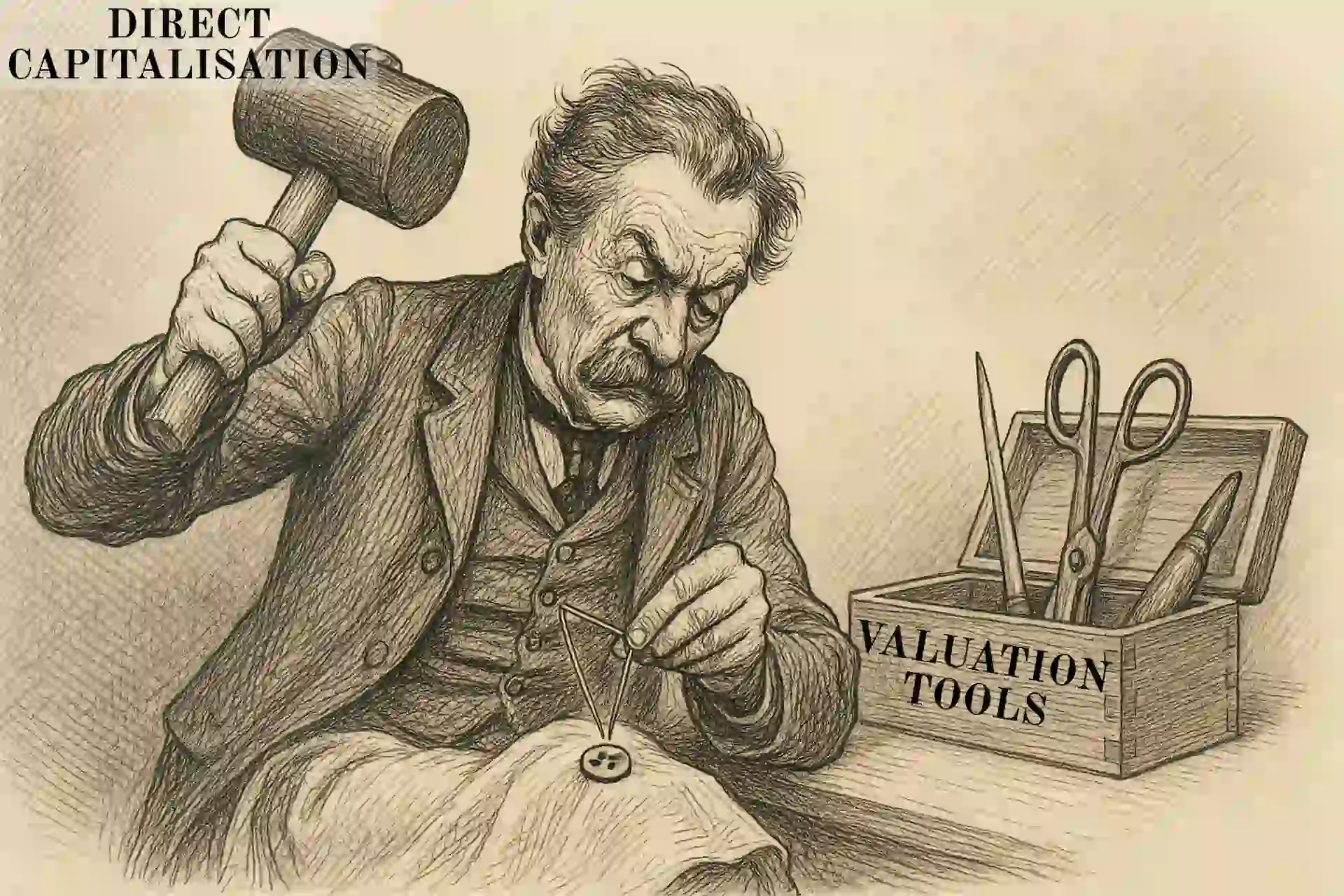
    Using the wrong tool for the job.
  4. Commercial real estate faces a fundamental challenge: As properties become more operationally complex, the tools used to financially analyze them aren't keeping pace which in turn risks the investability of the asset class. Our vision for the future of commercial real estate cash flow modelling and reporting.

    Update available modal over old spreadsheet software.
  5. Billions of dollars in office assets risk becoming stranded—not because of physical obsolescence, but because of how we value lease terms. As tenants demand more flexibility, outdated valuation methods have become a major bottleneck. In London this past March, Sam presented why traditional models are falling short, explores alternative approaches, and lays out a practical path forward.

    Video - A New Era in Office Valuations